

“I know I should feel happy looking at so much beauty. I mean, they call it paradise for a reason, right? But I don’t know what happiness is supposed to feel like anymore, and no amount of coconut trees and orange blossoms is going to change that.” (Bowman, 2018, p. 60)
“Summer Bird Blue” by Akemi Dawn Bowman is a work of fiction that was published in 2018 by Simon Pulse. In my review, I describe my reading experience and personal styling of the book so that you will know what to expect. I aim to illustrate the strengths, weaknesses and moods of “Summer Bird Blue”. My hope is that this unique review gives you a good idea of the energy and messages you can take away from the reading experience. You can find recommendations and the final rating of “Summer Bird Blue” at the end.
Table of Contents
Plot and Character Development
Recommendations and References

A Summary
Following the loss of Lea Seto, her family breaks apart. Lea’s sister Rumi is sent to Hawai’i in order to spend the summer with her aunt. Meanwhile, her mother stays behind in Washington. Raising two daughters single-handedly, Rumi and Lea’s mother used to have a loving relationship with them despite being absent and inattentive at times. Soon, old scorn cumulates to a feeling of total abandonment, grief and fury within Rumi. Fuming and seething with rage and shock, Rumi finds herself stranded at her aunty Ani’s house in Hawaii. She grieves for her sister Lea and the lost dream of writing music together for the rest of their lives. Can her family, her neighbors and the music of Hawaii help Rumi to find a sense of purpose and peace?
My Experience
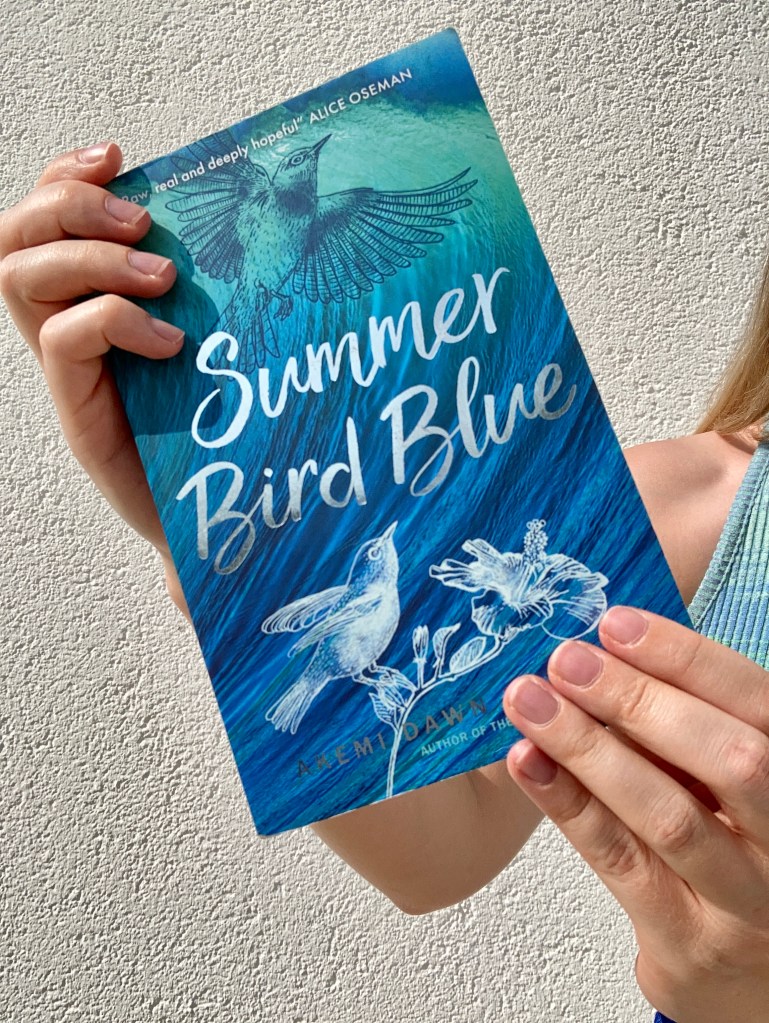
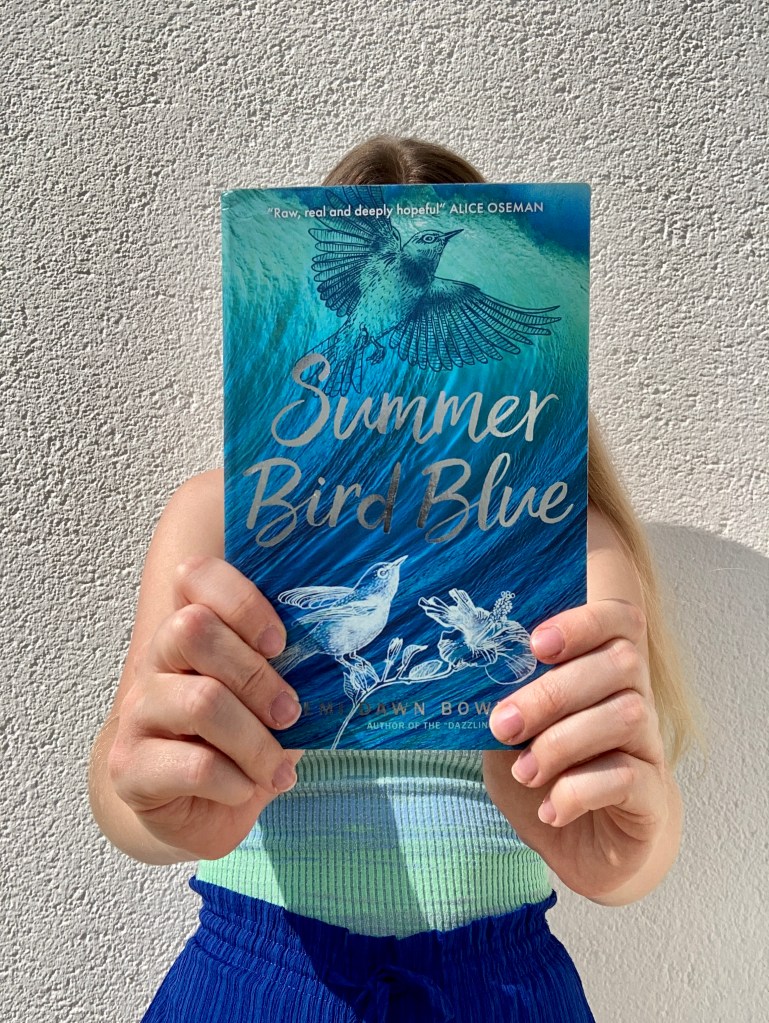
I chose to purchase a paperback copy of “Summer Bird Blue” because of its beautiful cover and high ratings. Prior reviews have described the tone and impact of the book as emotional, sad and deeply moving. In my view, the cover keeps its promise: The blue-green colors are gorgeous and the silvery font glitters in the sun. However, the tone deeply disappointed me. The writing did not evoke subtle emotions of sadness and compassion. Instead, my reading experience of “Summer Bird Blue” was undermined by several issues, the main one being this: I cannot be moved by the fate of a protagonist as unlikeable as Rumi Seto.
Unfortunately, the main character seems completely unlikable to me. Usually, first person narration all but guarantees that the readers root for the protagonist, since they experience the story from their point of view. On the contrary, I begrudged the narrative for forcing me to spend all of my time with Rumi Seto. In memories of the time before the tragedy, Rumi is portrayed as avoidant, dismissive and hostile towards all people. Literally all people on planet Earth, except for her sister and mother, and even those exceptions are temporary. Yet, Rumi appears to have been truly spoiled with love and acceptance for her mean, reticent and jealous behavior. Personally, I was unable to find her likeable at any point in the story.
My Style
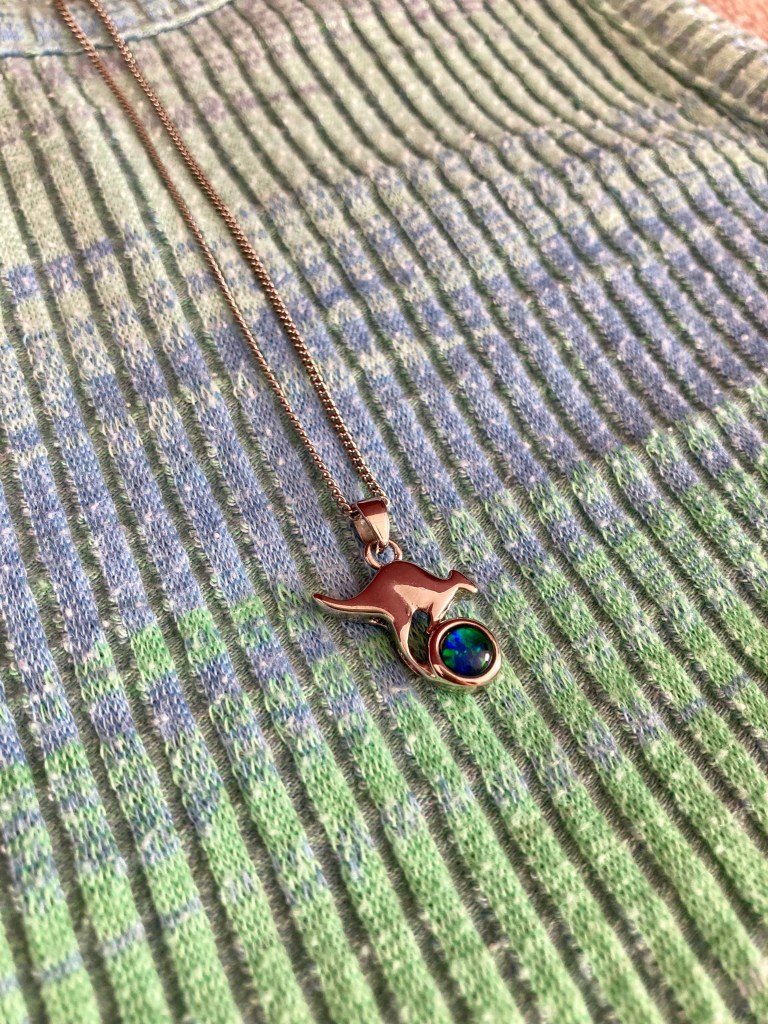
- Outfit: Dark blue shorts are clothes that match the book title, referring to the color blue and the summer season. I matched the blue-green cover to a multi-colored tank top that mimics the wave pattern of the illustration. The iridescent blue, teal and turquoise colors of clear waters are mirrored in the opal set in my necklace.
- Bilingual Bonus: I am observing several nods to the Hawaiian language in Summer Bird Blue. Yet, the linguistic representation is extremely limited. There are only a few words and grammatical patterns from Hawaiian Pidgin English. This was done by strewing in “stay” and “fo’” and “mo’ bettah” as many times as possible.
- Polyglot Prize: If you would like to experience the Hawaiian language or Hawaiian Pidgin English in book form, please read “He Mele A Hilo” by Ryka Aoki. I cannot read anything less after having experienced the soothing music of Ryka Aoki’s words. It has been spoiled for me.
- Award for the Best Entrance: A new haircut. (I liked the discussion of the emotional and spiritual significance of cutting hair.)
- Award for the Best Exit: Every time Rumi storms off.
- The True Hero of this Book: Rumi and Lea’s mom. (For being the only well-rounded character.)
- The True Villain of this Book: Rumi’s inner critic. (For virtually burning all other parts of Rumi, as well as anything and anyone in her path, with poisonous derision.)
- Edible Equivalent: A poke bowl from a mediocre chain restaurant. It will leave you slightly underwhelmed and hungry for something else.
- Alternative Title & Starring Roles:
Summer Bored Blue…
Starring:
The Grinch (literally ruined Christmas)
A Working Mom
Obi-Wan Kenobi
The Boy Next Door (feat. His Generic Friend Group)
The Writing
The author employs a first person narrator and short, simple sentences. Far too many consecutive sentences started with “I” or “she”. For the majority of the time, I did not enjoy the writing style. However, there are a few beautiful, poignant quotes from the book, which were a shocking break from the remainder of the text. It was quite a change in style and tone so it felt like Rumi was breaking character for a few sentences.
Plot and Character Development
All of the plot elements are introduced early on. There is barely any change or movement in the plot. There is an endless repetition of the same points, to such a degree that you could open the book to virtually any two pages and find that their contents are quite similar. Nothing much happens.
Regarding character development, I cannot understand why people continue to be willing to help Rumi. She treats people abhorrently, both before and after the tragedy. Secondly, I quickly became convinced that it is not possible to help Rumi. Reconciliation seems impossible. Peace seems impossible. Happiness seems impossible. It appears that all the characters are doing their utmost to help and soothe Rumi, who remains mostly unresponsive and ungrateful to their efforts.
Finding Meaning
Sadly, Rumi’s hostility towards other people causes the message of the book to fail. I am sure that the author was well-meaning and that the underlying intentions were good. Yet I have to ask myself: Which messages are the readers left with? I believe that “Summer Bird Blue” had the potential to send two powerful messages:
- Grief changes people. A sudden loss can be very shocking and impactful. Emotional overwhelm could lead people to communicate and act in hurtful, harsh and arbitrary ways. This comes with feelings of regret, shame and a desire to repair the relationship (to their true selves and other people) later on.
- Aromanticism and asexuality are valid. The protagonist is both aromantic and asexual. This is reflected in her view on other people. The absence of romantic and physical attraction is described, as well as a heightened sense of aesthetic attraction. However, the platonic aspect of relationships is underdeveloped. Rumi states that she sees people as having the potential to become “really good friends”. This makes me wonder: Where are her really good friends?
Due to Rumi’s characterisation, both of these messages fail to be conveyed. Rumi was already hostile towards people in every way – snapping at them, avoiding them, being condescending and mean to them – before the accident. Regardless of which stage of life Rumi is in, this seems to be her standard behavior and attitude. Rumi’s characterisation reinforces harmful stereotypes about aro-ace people, such as that they are cold, unapproachable and detached. Instead of a powerful message about how grief and marginalization lead to social exclusion and alienation… It seems that Rumi WANTED to be excluded all along. Rumi is a loner who despises social interaction.
Thankfully, there are at least a few conversations about aromanticism and asexuality. Rumi talks about her feelings with her confidantes. She seems to become increasingly aware and certain of this side of herself. Furthermore, “Summer Bird Blue” offers a powerful portrayal of parental abandonment and parentification. After Rumi and Lea’s father left the family, their mother took on two jobs. Rumi felt responsible for taking care of Lea as the older sibling. I found this description of herself very poignant: She felt like her mother’s helper, not her child.
Overall, the book contains meaningful messages about grief, asexuality, aromanticism, parentification and family dynamics. Still, some of these messages fall short because of Rumi’s personality and behaviors.
Highlights and Lowlights
The strengths of “Summer Bird Blue” are the well-developed family dynamic and the insightful themes. It is beautifully designed and the cover sparks joy.
The main weaknesses are that the main character is intensely unlikeable and that the plot is meager. The timeline is confusing in two regards: How long does this summer last? How old are Rumi and Lea? I understood that Rumi is seventeen and Lea is fifteen at the offset of the story. They go to the same high school, so they must be very close in age. However, this poses a continuation problem. Rumi was able to fully understand a serious conversation between adults when Lea was still a toddler. Furthermore, Rumi sees herself as Lea’s backup parent and her mother’s helper. I doubt how this could have happened with an age difference of only two years. All in all, the events and characters do not fully make sense to me.
Recommendations and References
At the end of my review, I can recommend “Summer Bird Blue” for younger readers. Readers of the same age as Rumi and Lea (between 13 and 19 years old) might connect with the characters and the writing style. It is also a good choice for people who want an aesthetic cover to accompany their outfit or beautify their bookshelf.
If you are looking for a magical book set in Hawai’i, I will recommend “He Mele A Hilo” by Ryka Aoki to you a thousand times over. It will make you feel as if you had tasted real ono kaukau, danced the hula, listened to the most wonderful music at the ‘aha mele and felt the spirit of the land. Aloha!
Conclusion and Rating
At the end of this review, I am giving “Summer Bird Blue” a rating of 2.75 out of 5 stars. It was not an enjoyable reading experience for me, but I can see other people liking this book. No book can be everybody’s favourite, but I sincerely hope that each book ever published becomes at least one person’s favourite.
Let’s discuss in the comments or per email: Do you believe that summer reads can have a sad, blue feeling to them? What kind of book would you choose to read in summer?
Thank you for reading my review. It means a lot to me. I aim to offer you inspiration and information for your reading journey and daily life. Do not miss out on my future blog posts and book reviews! They will include fiction and non-fiction books, recommendations, guides, advice, success stories and useful examples that will help you to create the learning goals, reading experiences and daily life of your dreams. Let’s connect!

 Julia Radi